What Can You Not Bring On A Boat?
What you cannot bring on a NYC boat tour: banned items, food and drink rules, bags and strollers, boarding screening, and what to pack instead.
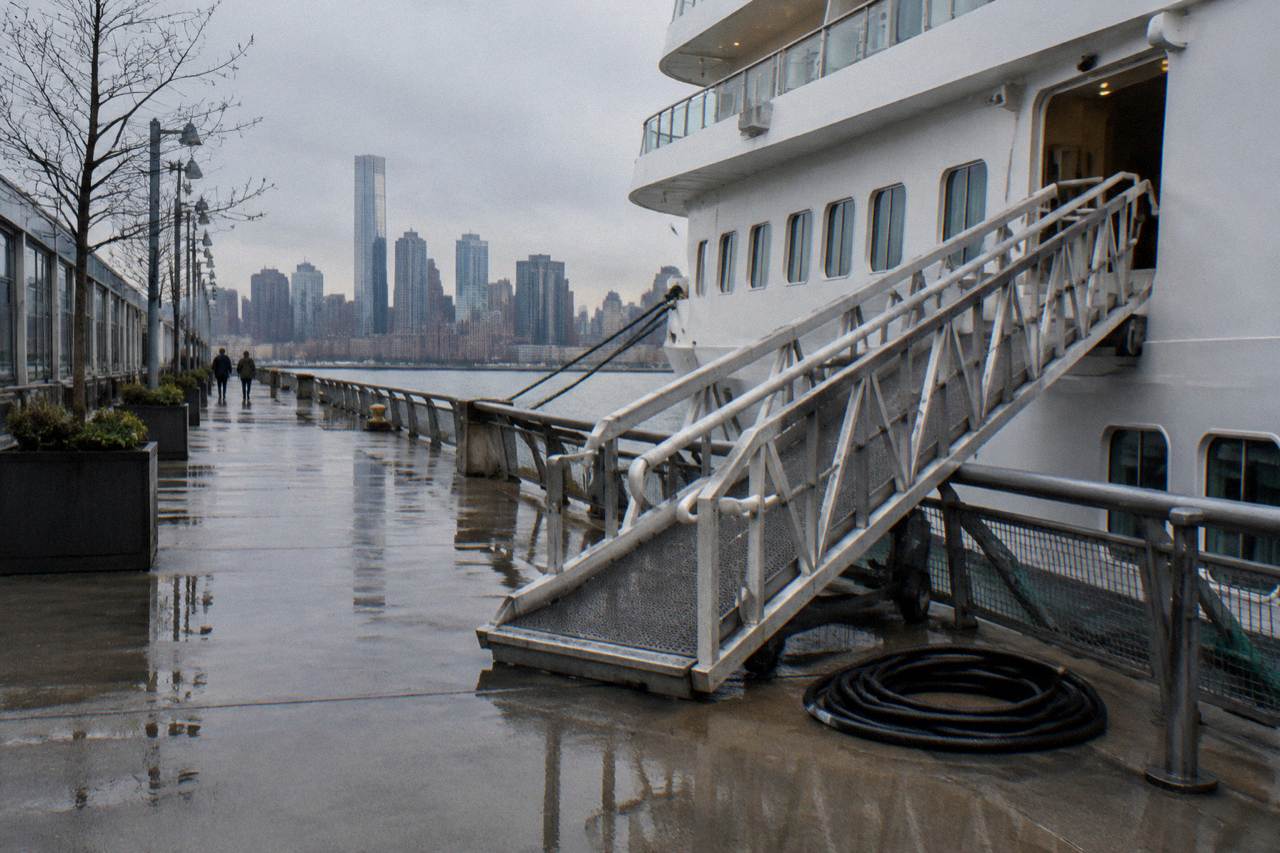
Security lines at Manhattan piers move faster than airport checkpoints, but the logic is the same: a short list of items stays on shore, and everything else gets a second look before you board. The rules differ by operator, and the difference matters most for families and for anyone planning to bring their own food. This page lays out what NYC cruise operators actually prohibit, drawn from their published guidance and boarding practice, then covers what is worth bringing instead.
What Can You Not Bring On A Boat?
On nearly every NYC harbor cruise you cannot bring weapons of any kind, illegal drugs, glass bottles, open alcohol of your own, fireworks or drones, large hard coolers, and, on most sailings, pets other than service animals. Operators also prohibit anything that blocks gangways, such as oversized strollers on some vessels, and smoking anywhere aboard. Rules vary by operator and vessel, so the listing for your specific cruise is the final word.
That list sounds broad, but in practice almost nothing an ordinary visitor carries is affected. The prohibited categories fall into three groups: safety items (weapons, flammables, drones), intoxicants you supply yourself (outside alcohol, in most cases), and bulky objects that get in other passengers' way on crowded decks. Security staff at the major piers screen for the first group, crew enforce the other two at the gangway and on board.
The single most common boarding surprise is alcohol. Passengers arrive with a bottle of wine for a sunset sail and discover the operator sells drinks on board and does not allow outside alcohol, a policy Circle Line states plainly for its cruises from Pier 83 and Pier 16 (see Circle Line Worth It). The second most common is the cooler: a small soft bag is usually fine, a rigid 40-quart cooler with wheels almost never is.
Why the strictness? These are US Coast Guard inspected passenger vessels, and crew answer for everything carried aboard. A drone flown from a moving deck near the Statue of Liberty also runs into federal airspace and park rules, which is why operators ban them outright rather than argue degrees.
If you are still choosing a cruise, the format changes the rules more than the price does. A big sightseeing vessel is the most permissive, a small schooner the least, and a speedboat sits in between with its own height and age limits. These three cover that spread:
The Circle Line Ultimate Sightseeing Loop is the roomy baseline: 2 hours 30 minutes, from $39 per person, rating 4.6 from 7,921 reviews, departing Pier 83 at W 42nd St and 12th Ave. The Beast is the same operator's 30-minute speedboat ride, from $29 per person, with tighter rider rules because of the speeds involved. The Sunset Sail aboard the schooner Adirondack, from $90.12 per person out of Pier 62 at Chelsea Piers, is the small-boat end of the scale, where deck space is at a premium and every bag matters.
What Is Banned On Most Boats?
Weapons and sharp objects, illegal drugs, fireworks and flammables, glass containers on many vessels, drones, hoverboards and e-scooters, outside alcohol, and non-service animals are banned on most NYC cruise boats. Coolers of any size are banned on several operators' cruises, and smoking, including vaping, is prohibited on board everywhere. Large umbrellas and tripods are often refused on small vessels.
The weapons category is wider than people expect. It includes not just the obvious but also pocket knives, multi-tools, mace and pepper spray, and anything screening staff judge to be a hazard, which is discretionary. If you carry a pocketknife as a habit, leave it at the hotel; there is no locker at the pier, and confiscated items are not returned.
Drones deserve their own mention because visitors are surprised by them every week. Flying from a cruise vessel is prohibited by operators, and the airspace around the harbor and the Statue of Liberty is restricted regardless of where you launch from. There is no version of this where you quietly get the shot.
Hoverboards, e-scooters and e-bikes are banned as both a fire risk, their lithium batteries are the concern, and a space problem. Bicycles are generally not permitted on tour cruises either, though regular folding strollers usually are, more on that below.
For a compact view of the common categories and how strictly each is enforced, this table sums up the pattern across the major NYC operators:
| Item | Typical NYC cruise rule | Where it is enforced |
|---|---|---|
| Weapons, knives, mace | Prohibited universally | Security screening at pier |
| Illegal drugs | Prohibited universally | Security screening |
| Outside alcohol | Prohibited on most cruises; Champagne toast exceptions exist on some private charters | Gangway and on board |
| Glass bottles | Prohibited or discouraged on many vessels | Gangway |
| Drones | Prohibited on board and over the harbor area | Gangway and on board |
| Coolers, hard-sided | Prohibited on several operators; soft small bags usually fine | Gangway |
| Non-service pets | Prohibited except designated dog cruises | Gangway |
| Smoking and vaping | Prohibited on board | On board |
One operator-specific note: Circle Line, which runs most of the big-boat sightseeing from Midtown, has hosted special dog-friendly event cruises, so the pet rule is a default rather than a law of nature. The default still holds for every regular sailing in this site's roster, so assume no pets unless the listing says otherwise.
The screening itself is real. Statue City Cruises, the National Park Service's authorized ferry operator to Liberty and Ellis Islands, runs airport-style screening with metal detectors for its departures, as the Park Service explains on its directions page. Tour cruises that only pass the Statue generally use lighter checks, but the prohibited list is similar, and crews can refuse boarding to anyone who will not comply.
Thinking about which big-boat cruise to book around these rules? The roomier the vessel, the simpler the packing question.
Can You Bring Food And Drinks?
On most NYC sightseeing cruises you cannot bring your own alcohol, and many operators also prohibit outside food on dining cruises, where a meal is part of the ticket. Snacks and sealed non-alcoholic drinks are usually tolerated on basic sightseeing sailings, but the policy is set per operator and per cruise type, so check the listing before packing a picnic. Glass bottles are the most refused item in this category.
The dividing line is whether food is part of what you paid for. On a brunch, lunch or dinner cruise, outside food competes directly with the product, and operators bar it. The City Cruises buffet lunch from Pier 61, from $115.13 per person with a lunch buffet included, is that kind of ticket. The Classic Harbor Line skyline brunch, 2 hours 45 minutes from $139.92 with a three-course prix fixe brunch and one complimentary drink, is another.
On plain sightseeing loops the rules loosen. Circle Line vessels sell snacks and drinks on board and generally ask that you not bring a full picnic, but a bottle of water and a granola bar for a child rarely draw comment. Sealed containers are viewed more kindly than open ones, and nothing requiring a table, utensils or reheating belongs on any of these boats.
Alcohol is the one with no give. If a cruise serves drinks, outside alcohol is prohibited; if it does not, outside alcohol is still prohibited. Classic Harbor Line cruises from Pier 62, including the City Lights cruise with a drink included from $78.57, pour their own and expect you to leave yours ashore. The only real exception in practice is a private charter, where the operator agrees terms with you directly, and even then it is written into the charter contract rather than waved through on the day.
For families, the practical read is this: pack like you are going to a movie theater, not a beach. Snacks that fit in a pocket or a small soft bag, water in plastic or metal, nothing in glass, nothing that needs a cooler. If your group has a genuine dietary need, call the operator ahead; most will work with a sealed allergy-safe item, and a documented medical need is different from a preference in their policies.
What About Bags And Strollers?
Foldable strollers are usually allowed on large NYC cruise vessels and usually not on small schooners and speedboats; large wagons and double-wide strollers are refused almost everywhere. Bags go through screening at the bigger piers, so pack light, skip hard coolers, and be ready to collapse a stroller on the gangway. There is no bag check or locker storage at the piers, so whatever you bring stays with you.
The vessel size rule is the shortcut. On the Circle Line Ultimate Sightseeing Loop, a large multi-deck boat, a folded stroller is a non-event. On the Adirondack, an 80-foot schooner where deck clearance is measured in feet and lines run everywhere across the deck, a stroller is a genuine hazard and crews will ask you to leave it dockside, with no secure place dockside to leave it. Know your boat before you load your family.
The same logic governs luggage. No NYC tour cruise permits full-size suitcases, and none offers luggage storage, because these are 90-minute to 3-hour excursions, not voyages. If you are transiting between hotel and airport with bags, the honest answer is that a harbor cruise does not fit the plan; ship the bags or book the cruise on a different day.
Wheelchairs and mobility devices are a different matter and are treated as access, not baggage. Circle Line states that its Pier 83 vessels accommodate electric wheelchairs and scooters with wide gangways, while at Pier 16 standard wheelchairs are limited to the first level and some smaller vessels cannot board electric chairs at all, as its own cruise and pier guidance describes. When in doubt, call the operator with the vessel name and the sailing date.
What about umbrellas, selfie sticks and tripods? Compact umbrellas are fine; golf umbrellas are a nuisance on a crowded deck and crews may say so. Selfie sticks are tolerated on big boats and discouraged on small ones. Tripods are the least welcome, since a moving deck plus three metal legs plus a narrow walkway is a trip hazard, and phones have made them unnecessary for most people anyway.
What Should You Bring Instead?
Bring photo ID matching your booking, a phone or camera, a light layer even in summer, sunscreen, sunglasses, a hat, a small soft bag, any required medication, and a refillable plastic or metal water bottle. In colder months add a warm hat and gloves for the open decks. Cash is optional; nearly everything on board is card-based, though a small amount helps for tips.
The layer advice is the one locals repeat most. Harbor wind on a moving boat drops the felt temperature noticeably, and evening cruises feel it hardest. A fleece or windbreaker in June, a real coat from November through March, and something for children regardless of season, because a cold child ends the trip early.
Sunscreen matters even when the sky is gray; reflection off the water adds exposure. Non-spray sunscreen is also the polite choice, since aerosols are unwelcome in a breeze on a crowded deck and some operators treat them like any pressurized can.
Here is the short packing list in table form, matched to cruise type:
| Cruise type | Essentials | Leave behind |
|---|---|---|
| Big sightseeing boat (Pier 83, Pier 78) | ID, phone, layer, water bottle, small soft bag | Coolers, outside alcohol, drones, glass |
| Speedboat ride | ID, snug layer or poncho, secure strap for glasses | Loose hats, bags that cannot zip shut, anything not strapped down |
| Small schooner sail | ID, warm layer, flat shoes with grip | Strollers, big bags, hard-sided anything |
| Brunch or dinner cruise | ID, layer for the outer deck, confirmation | Outside food, outside alcohol |
Footwear is its own quiet rule. Nobody bans flip-flops, but on a schooner or any boat where you may step over lines and coamings, flat shoes with grip are what the crew hopes to see. Heels are actively disliked on sailing vessels, where heels punch through wooden deck seams.
Medication belongs in a pocket, not a checked-anything, since there is no checked anything. If a member of your group has an epinephrine auto-injector or inhaler, bring it and tell the crew where it is at boarding; this is standard and unremarkable to them.
A note on ID: have the name-matching detail ready. Bookings are usually scanned from a phone, but if a confirmation is under a different name from yours, or you booked for a group, a screenshot of the confirmation saves an awkward two minutes at the desk.
What Happens At Boarding?
Plan to arrive 30 to 45 minutes before departure at the major NYC cruise piers. Circle Line recommends arriving 45 minutes early at Pier 83 and Pier 16; Statue City Cruises ferry departures to the islands run airport-style security with queues that stretch at peak times. Boarding usually starts shortly before the sailing time, vessels leave on time, and late arrivals are not chased.
Boarding itself is orderly and fast once screening is done: a crew member scans your confirmation, you cross the gangway, and on unreserved-seat boats you pick where to sit, which is why early boarders get the rail. On the big Circle Line vessels from Pier 83, the upper-deck rail seats on the Statue side go first. On schooners out of Pier 62, the crew usually assigns or steers seating to balance the boat.
Pier logistics deserve a paragraph of their own, and there is a fuller guide to NYC boat tour piers and boarding points on this site. The short version for this topic: Pier 83 at W 42nd St and 12th Ave, Pier 78 and Pier 79 on the Hudson at W 38th and W 39th, Pier 62 and Pier 61 at Chelsea Piers, Pier 16 at the Seaport, and Pier 36 on the Lower East Side. Driving to Pier 83 is workable; the surface lot beside it holds roughly 200 cars and has been reported at $30 to $35 per day depending on day and entry time, though rates change and should be confirmed on arrival.
Departure timing is strict in one direction only. Boats do not wait, but they also do not leave early. Your real deadline is the start of boarding, since the gangway closes a few minutes before the posted sailing. For evening cruises, build in food time before, not after; grabbing a slice is faster than you think, but the line at the pier restroom before a 2-hour sailing is not.
Weather cancellations do happen, mainly for thunderstorms and high wind on the smaller vessels, and operators contact ticketholders through the booking channel when they do. The listings in this site's roster generally carry free cancellation, so the risk of losing money to a storm is low if you read the terms when booking. The Beast, for instance, lists free cancellation per the listing and simply does not run in rain or thunderstorms.
Which NYC Boat Tours Have The Strictest Rules?
Speedboats and small sailing vessels have the strictest rules: The Beast enforces a minimum rider height and excludes pregnant guests and people with heart or back conditions, and schooners restrict strollers, oversized bags and sometimes shoe type. Large sightseeing vessels are the most permissive, and dining cruises sit in between, mainly restricting outside food and drink.
The Beast is the clearest case. It is a 30-minute ride at speed with spray and sharp turns, so Circle Line sets a minimum height for children, lists medical exclusions, and requires everything loose to be secured, hats and phones included, since a phone over the side at 40 mph is gone. Its listing carries a 4.7 rating from 4,605 reviews, which tells you the restrictions do not dent the fun.
Schooners such as the Adirondack, sailing from Pier 62, are strict about space rather than physiology. The trade for the intimacy is that every object on deck matters more. A review on one Classic Harbor Line listing notes the crew's briefing before departure, which is where these rules get explained in person; listen for two minutes and the rest of the sail is relaxed.
Big-boat cruises, the Ultimate Sightseeing Loop being the example, are the easy mode of NYC boating: wide decks, restrooms, a snack bar, room for a folded stroller, and screening that takes seconds rather than minutes. If your group includes someone who cannot guarantee compliance with a drone rule or an outside-alcohol rule because of a language gap or a teenager, this is the format that forgives.
Dining cruises police the table. Outside food and drink are the issue, plus dress expectations on some premium sailings, which this site covers separately in its guide to City Cruises dress codes. If you have booked the 5-course dinner cruise with live music from Pier 36, from $156.36 per person, arrive dressed and empty-handed and the boarding conversation will be about your table, not your bag.
A Packing Checklist That Survives Contact With The Pier
The checklist that survives the pier is the one built around boarding day itself: keep your documents, identification, medications, phone charger, swimsuit, and a change of clothes in a bag that stays with you rather than in checked luggage, and let everything else wait. Pack for the first few hours, not the first week, and the pier loses its power to ruin your day.
The rewards for packing light are real. A small bag boards faster, sits anywhere, and never becomes the thing you are managing instead of looking at the skyline. On a sailing vessel it can tuck under a bench; on a speedboat you will be asked to stow it before the first turn; on a dinner cruise it goes under your chair. One bag, one layer, one bottle, ID and phone: that is the whole art.
For the tours in this article's comparison set, the pattern holds across all three formats, and the same packing list serves each:
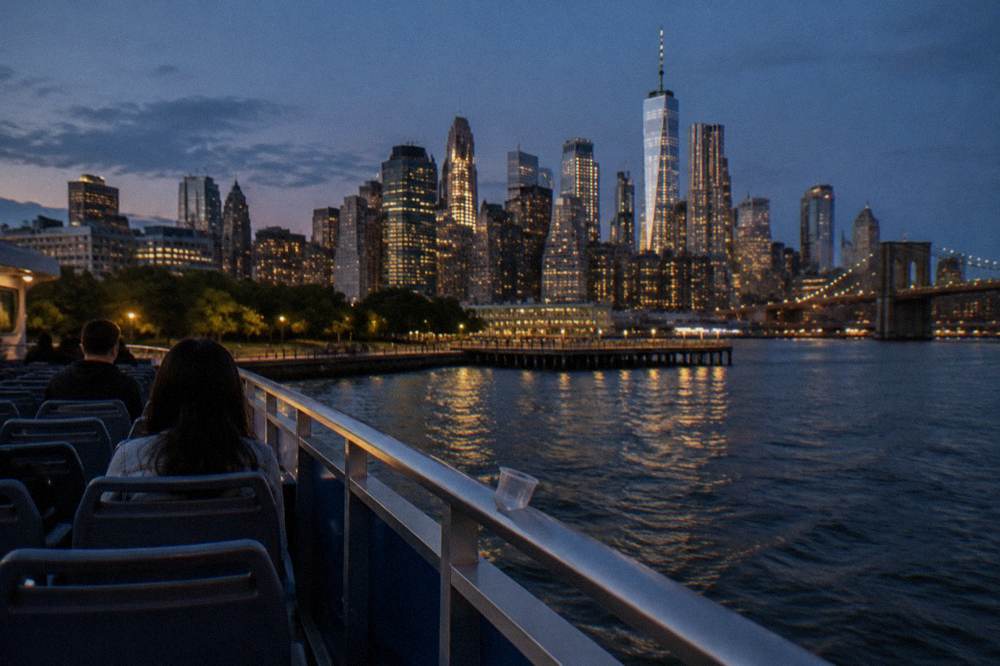
Choosing among NYC harbor cruises comes down to format and price far more than to rule differences, and Hudson River Boat Tours keeps the full roster, from the $25 NY Waterway 50-minute quick cruise to private charters, with each listing's own terms spelled out. Read the listing, pack the small bag, arrive 45 minutes early, and the prohibited-items list will never be about you.
Common Questions About Boat Tour Packing Rules
What Can You Not Bring On A Boat?
Weapons, illegal drugs, fireworks, drones, glass bottles on many vessels, outside alcohol, hard coolers, hoverboards and e-scooters, and non-service pets. Smoking and vaping are prohibited on board. Large strollers and wagons are refused on small vessels. Check your specific cruise's listing, since each operator sets its own policy.
Can You Bring Your Own Alcohol On A NYC Cruise?
Almost never. Operators that serve drinks prohibit outside alcohol, and operators that do not serve drinks prohibit it too. Private charters are the only route to bringing your own, and even then it must be agreed with the operator in advance.
Can You Bring A Stroller On A Sightseeing Cruise?
A foldable stroller is usually fine on large vessels like the Circle Line boats from Pier 83. Small schooners and speedboats generally cannot take them, and there is no pier storage, so plan to carry the child and collapse the stroller or leave it home.
How Early Should You Arrive For Boarding?
Circle Line recommends 45 minutes before departure at Pier 83 and Pier 16. For Statue City Cruises ferries to Liberty and Ellis Islands, allow more at peak times because screening is airport-style. Boats leave on time and do not wait for late passengers.
Is There A Bag Size Limit Or Storage At The Piers?
There is no formal size limit on most sightseeing cruises, but no pier offers lockers or bag check, and full-size luggage is not permitted. A small soft day bag is the practical standard; anything you would check on a flight stays home or at your hotel.
Can You Bring Food On A Dinner Or Brunch Cruise?
No. Meal cruises include the meal in the ticket, from the City Cruises buffet lunch at $115.13 per person to the 5-course dinner cruise from $156.36, and outside food competes with what you paid for. Allergy and medical needs are the exception; call ahead.